New KENAK 2017 – What Changes?
Update 25/11/2017:
From Monday 27/11/2017 the old KENAK (Energy Performance of Buildings Regulation) ceases to apply and the new KENAK (2017) comes into force, following the publication in the Government Gazette of the new Technical Guidelines (TOTEE) and the correction of some clerical errors by a new Gazette issue of 23/11/2017.
You can download the Gazette issues from the links below (in Greek):
Approval and application of the TCG Technical Guidelines on the Energy Performance of Buildings, Gazette B’ 4003/17.11.2017
Corrections to TOTEE, Gazette B’ 4108/23.11.2017
By Decision No. DEPEA/oik. 178581 of the Ministers of Finance and of Environment and Energy, the new Energy Performance of Buildings Regulation (KENAK) was approved and published in Government Gazette B’ 2367/12-7-2017.
You can download the full text of the new Regulation by clicking here: KENAK 2017 (in Greek).
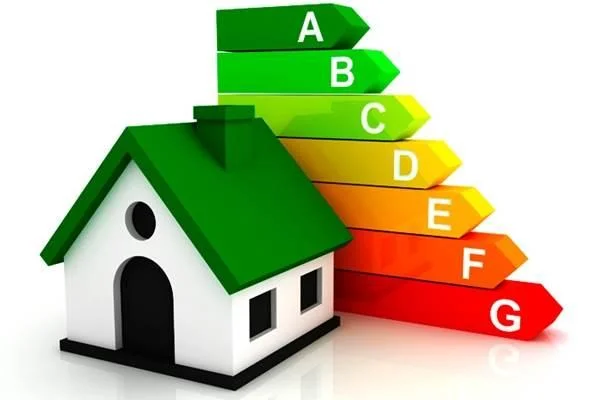 It is an evolution of the previous Regulation, with improvements and additions to individual articles and a slight tightening of the requirements for new buildings.
The new Regulation applies from the date on which new Technical Guidelines (TOTEE) are approved by Ministerial Decision. At the time of writing, no new TOTEE have been approved, so the previous KENAK still applies.
In this article we focus mainly on the changes the new KENAK brings to building specifications and technical requirements; we do not deal with issues relating to the Energy Performance Study (MEA) or the energy inspection for issuing an Energy Performance Certificate (PEA).
- A key feature of the new KENAK is the distinction between new and existing buildings. In several articles, existing buildings undergoing major renovation are treated slightly differently from new ones. This makes sense, as new, stricter thermal transmittance values are set for new buildings that did not exist when existing buildings were constructed, even if they were built under the old KENAK.
It would therefore not be reasonable to require a renovation of a building built under the old KENAK to include an energy upgrade to the requirements of the new one!
An important point, mentioned in several articles regarding renovated buildings, is that compliance with the new requirements applies where it is technically, functionally and economically feasible (Article 7, par. 5). - A difference from the old KENAK is that energy performance calculations are carried out separately for each main use of the individual building units (Article 5, par. 5).
- In Table B.1, which gives the conversion factors from the building’s final energy consumption to primary energy, district heating from thermal power plants and district heating from renewables have been added as sources.
- In the Minimum Building Specifications, Table C.1 (Maximum permitted thermal transmittance of building elements per climate zone, for new buildings) has become far more detailed, describing more fully the elements that may make up a building’s envelope.
- The values in the above table have been made stricter than in the previous KENAK by around 10%, for almost all categories of building element.
- For existing buildings, Table C.2 is introduced, in which the corresponding values essentially remain as in the previous KENAK. For example, for the building element “Wall in contact with the outside air”, which particularly concerns our company’s products, the values are:
| Wall in contact with the outside air | Thermal transmittance [W/m²K] – CLIMATE ZONE | |||
|---|---|---|---|---|
| A | B | C | D | |
| Table C.1 (New buildings) | 0.55 | 0.45 | 0.40 | 0.35 |
| Table C.2 (Existing buildings) | 0.60 | 0.50 | 0.45 | 0.40 |
- Likewise, the values of the maximum permitted average thermal transmittance (Um) per climate zone have been tightened for new buildings, while the old KENAK values are kept for existing ones (Tables C.3, C.4, Diagrams C.1, C.2).
- For domestic hot water (DHW), the concept of a low-demand building is introduced, as well as DHW recirculation with a circulator (a demand-controlled variable-speed circulator with constant Δp is required).
- The obligation to use heat metering where costs must be allocated is repeated (it already applied under the old TOTEE). However, the concept of controlling terminal units through room thermostats and thermostatic valves per functional space is also introduced (Article 8, par. 3.1.4).
- The new Regulation introduces a minimum lighting efficacy (60 lm/W) for tertiary-sector buildings, as well as the requirement to control lighting with separate switches (par. 3.1.5).
- Two new paragraphs concerning a building’s technical systems are introduced:
– The level of automation is specified according to the building’s floor area and use (par. 3.1.6).
– Each technical element of the building is required to comply with EU Regulations under Directives 2009/125/EC, 2010/30/EU and 2012/27/EU. - Where the above cannot be applied, adequate technical justification is required.
- The general requirements of the so-called “reference building” remain the same, while some new definitions and descriptions are introduced, clarifying cases such as the use of different heating/cooling systems in the same building, etc.
One remark: it has been noted in the relevant literature that the requirements set for the reference building in KENAK 2017 are the same as those of KENAK 2010, while for some individual systems (e.g. condensing boilers, air handling units) new regulations with stricter requirements have been issued, with which systems on the market must comply. This is indeed true; however, the new KENAK does not generally set the reference building’s values as the minimum requirement for the systems allowed in a new building, since the reference building is an ideal building identical to the one being studied, with certain “minimum” technical characteristics, against which the energy performance of the actual building with its actual technical characteristics is calculated.
It goes without saying that a newly built or radically renovated actual building cannot fall short of the reference building’s technical characteristics, which is why Article 8, par. 4 of the new Regulation states that “In all other respects the specifications of the reference building apply, as set out in Article 9 hereof and further specified in the relevant TOTEE”.
We also recall the immediately preceding paragraph (Article 8, par. 3.2): “In any case, the individual technical systems of the building or building unit under examination shall comply with the requirements laid down in the implementing regulations issued under Directives 2009/125/EC and 2010/30/EU, as amended by Directive 2012/27/EU”.
Therefore, in our opinion, the obligation to comply with the requirements of the new European Regulations in force is not lifted by the adoption of lower specifications for the reference building.
We are therefore awaiting the issue and approval of the new TCG Technical Guidelines (TOTEE) for the immediate application of the new KENAK.
Panagiotis K. Panagiotopoulos
Mechanical Engineer NTUA
for
Panagiotopoulos Bricks and Roof Tiles S.A.